

Dispatch from Lovely Lyon
Silk weaving workshops, hidden traboules, and an epic archaeology museum amid the Roman ruins
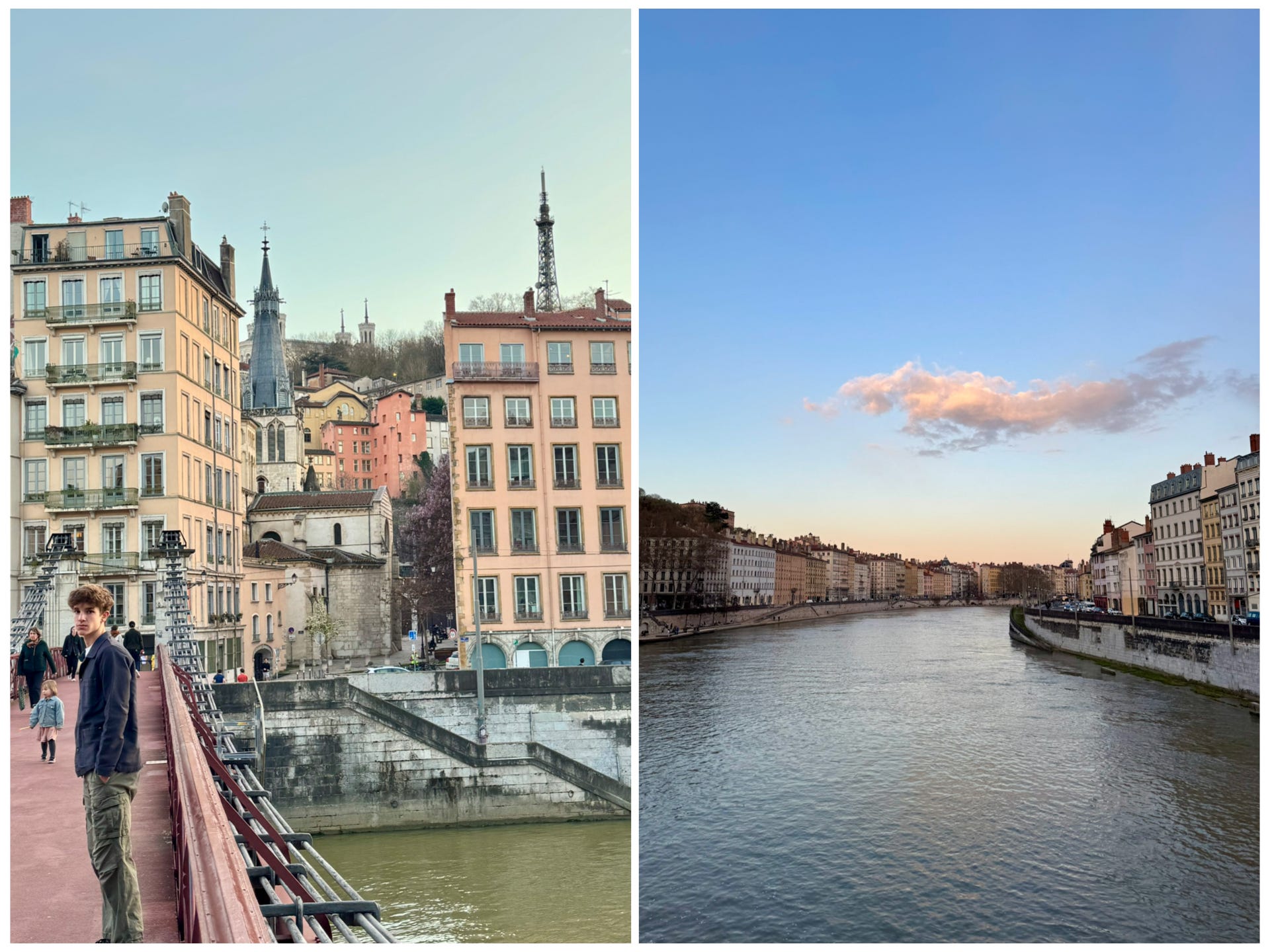
My son and I recently, and unexpectedly, ended up in Lyon, thanks to a hometown PSG match fiasco in Paris (in which the very reason for our trip was postponed). No matter, we scrambled and an on-the-ground plan emerged that pleased us both—the perfect convergence of interests for a soccer-obsessed teenager and his craft-obsessed mom.
In addition to a Europa League semi-final, the trip highlights played out in a series of historic weaving workshops, ancient ruins, and an exciting archaeology museum. Pro tip: Don’t wait for a mishap to nudge you—this second city, only a two-hour train ride from Paris, is a worthy destination in its own right.
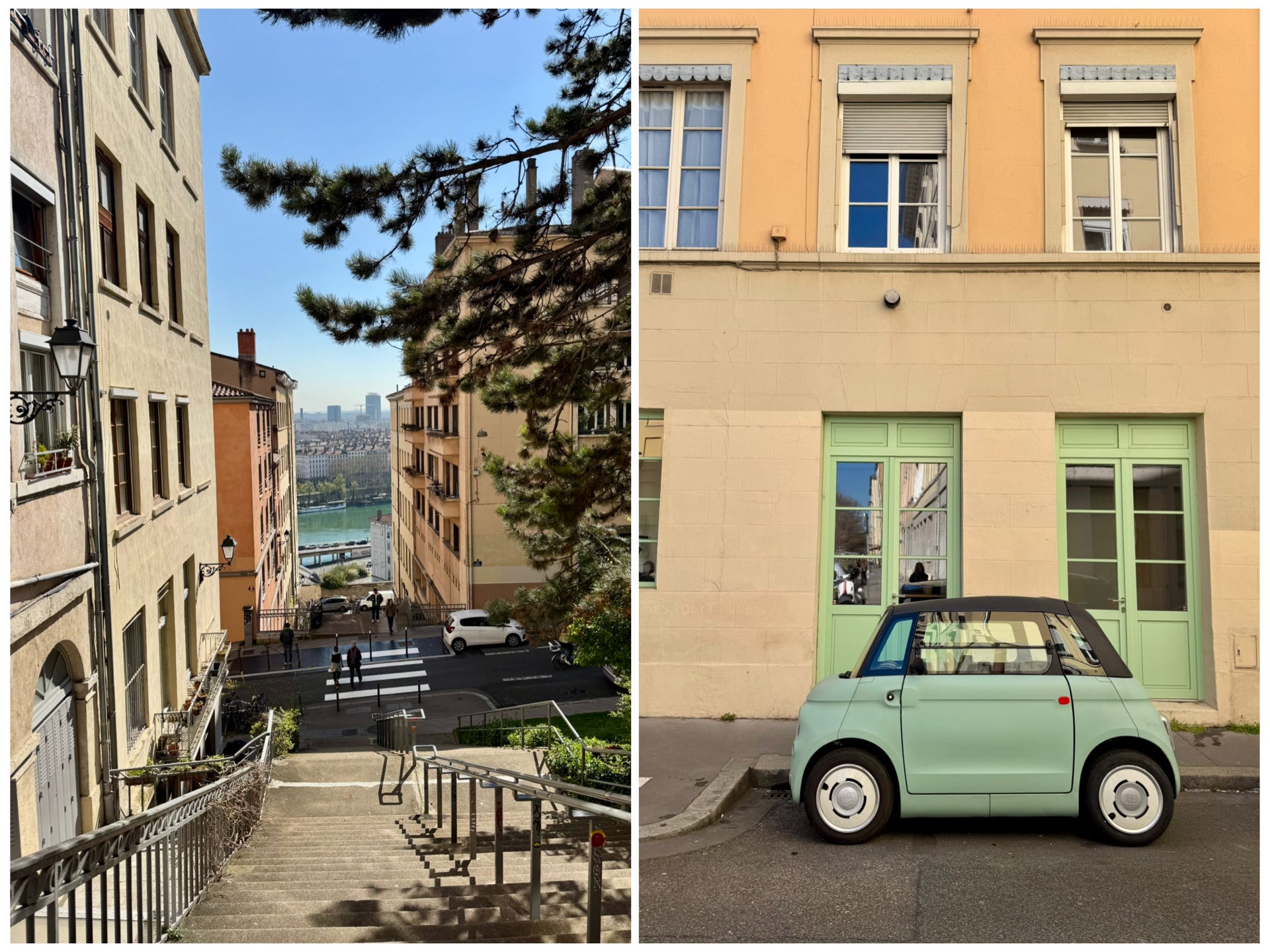
Spring hits early in Lyon, pulling blossoms onto branches and locals to the edge of the Saône to eat, talk, think, and watch the world go by—peak conditions for experiencing local life without the madness and heat of summer. Lyon is a big, busy city, but its narrow cobblestone streets, red-tiled roofs and pastel hues bring a Mediterranean charm, and Roman ruins, Gothic churches, and Italian-influenced Renaissance architecture serve as visual timestamps to its extremely long and fascinating history.
THE WEAVING TRAIL
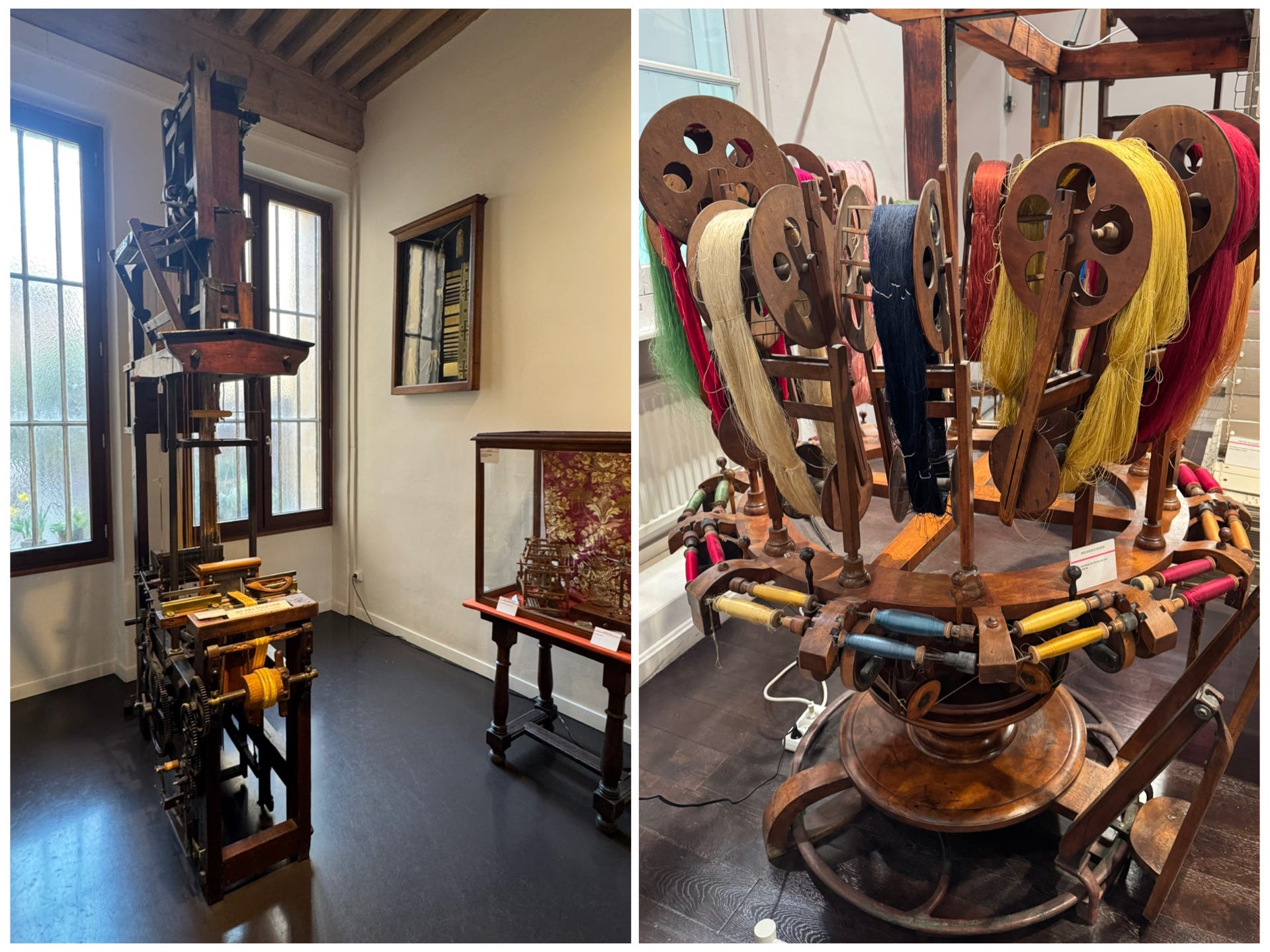
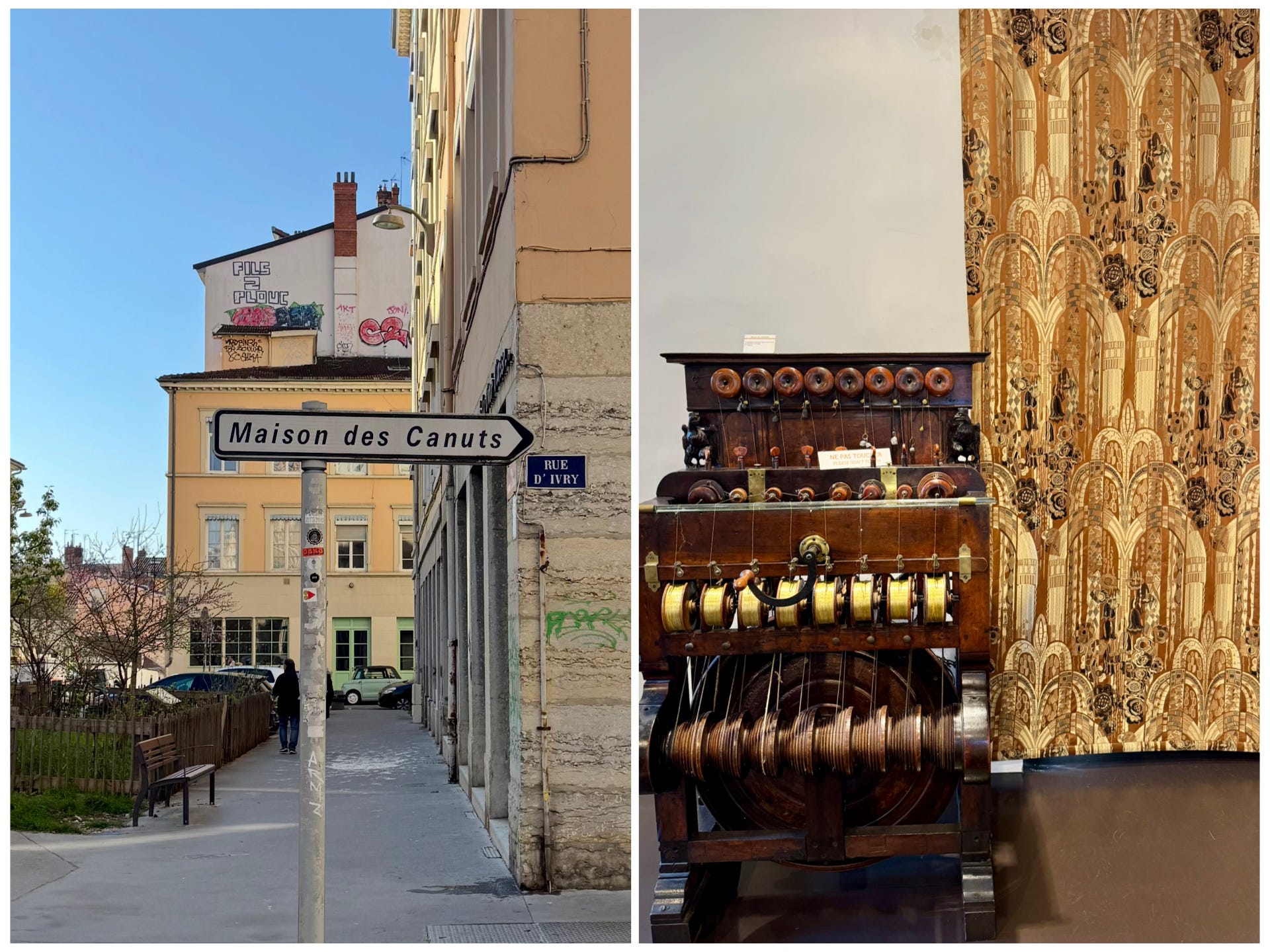
Day one for any traditional craft enthusiast/history buff starts with a long, lovely stroll all the way up to the Croix-Rousse neighborhood, the historic heart of the canuts (silk weavers) and where buildings were famously built with high ceilings to accommodate hulking looms. At one time, Lyon was ground zero for silk production, and its renowned skilled weavers—inventors of the Jacquard loom—are known for their historic contributions to innovative technologies and refinements, as well as the role they played in workers’ rights. While most of the actual present-day silk weaving has moved to rural areas just outside the city, a few of these original workshops double as museums, dropping guests right into stories of Lyon’s silk-weaving past.
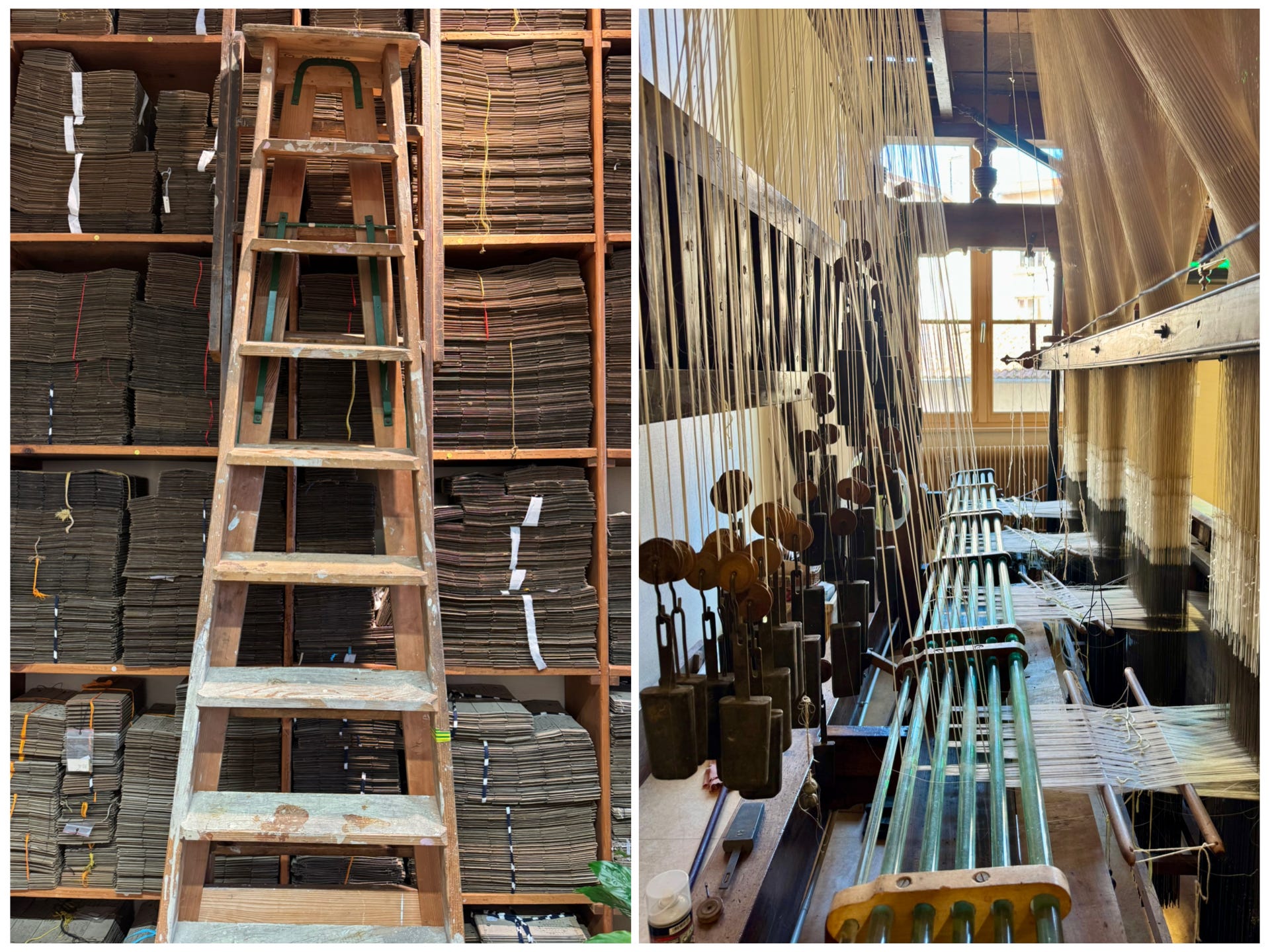
With its extensive collection of antique weaving equipment and very thorough supplemental information (English versions available), La Maison des Canuts is a perfect place to start. Learn about the city’s expansive silk history, including the fascinating weaver uprising (spoiler: it lasted less than a week but set the stage for future worker protections). The museum is walk-in, but you’ll need to book an appointment for a demonstration of the beautiful antique looms across the street. At Soierie Vivante, you can tour the former workshop-apartment that once belonged to the rare female weaver, Madame Létourneau, who was her master weaver father’s only child and inherited his entire collection of looms when he died. She didn’t have children (she was probably too busy weaving!), so she left the looms to a trust with the only stipulation that they be used: “A working loom is a loom that is still alive.” And so her legacy continues with the same click-clack of more than a century. It’s fascinating that such massive old machines were responsible for the narrow furls of ribbon and braided trim her workshop produced.
GOING UNDERGROUND
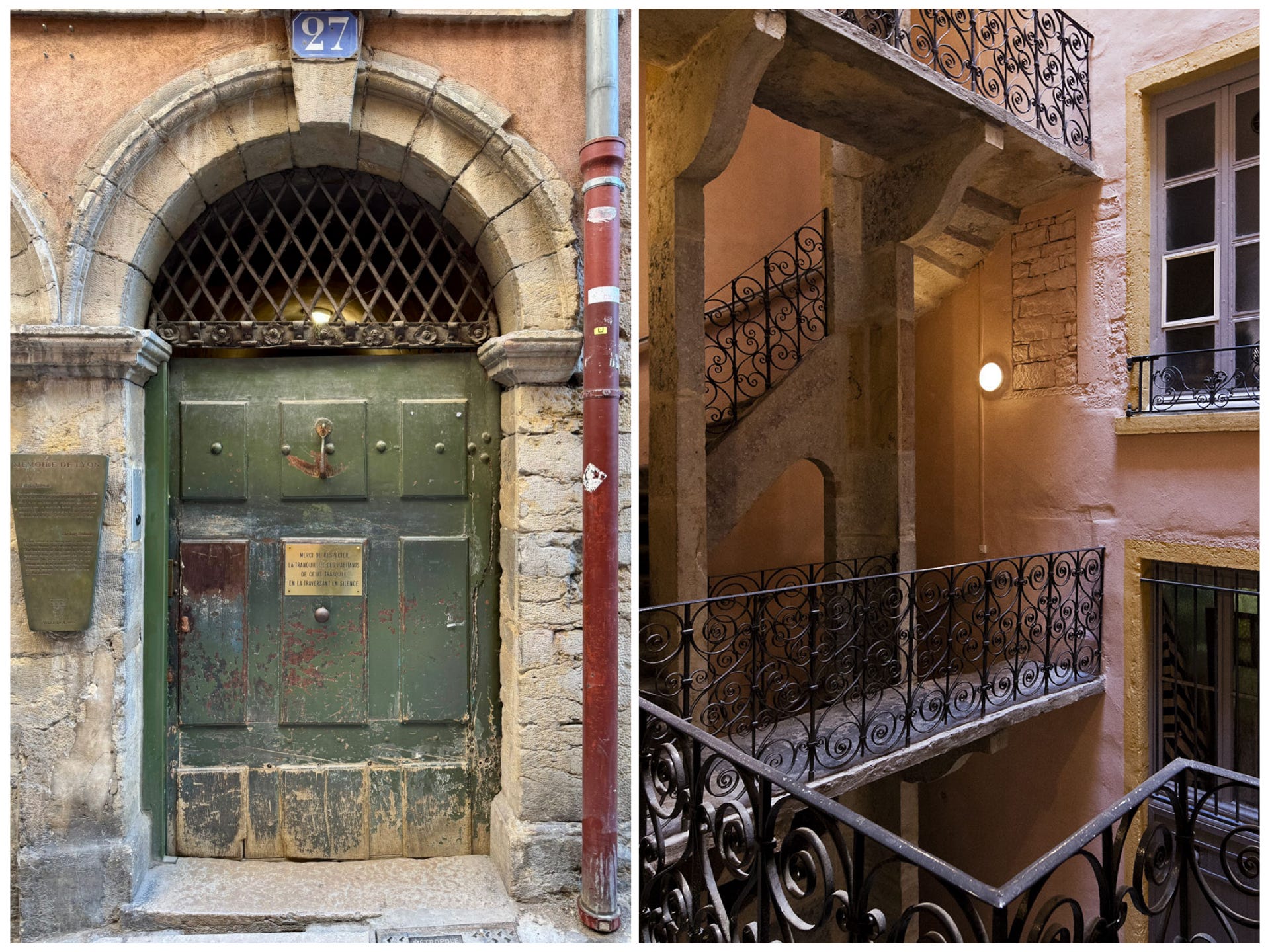
If exploring the city’s labyrinthine passageways sounds like a tourist magnet, well, I suppose it is. But you would be horribly misguided to miss this fascinating part of Lyonnaise history. These secret interior passageways, or traboules, run throughout Vieux Lyon, connecting seemingly regular doors along the street (marked by small, discreet seals on walls) to a network of other buildings built during the Renaissance —many with courtyards and fabulously ornate interior staircases—as well as the to the Saône. My favorite detail—OF COURSE!—is how the weavers used them as safe passage for their valuable silk rolls, protecting them from both weather and theft. I really love the image of a weaver, making his way up one of these frilly staircase with a giant roll of Jacquard silk over shoulder.
ROMAN RUINS
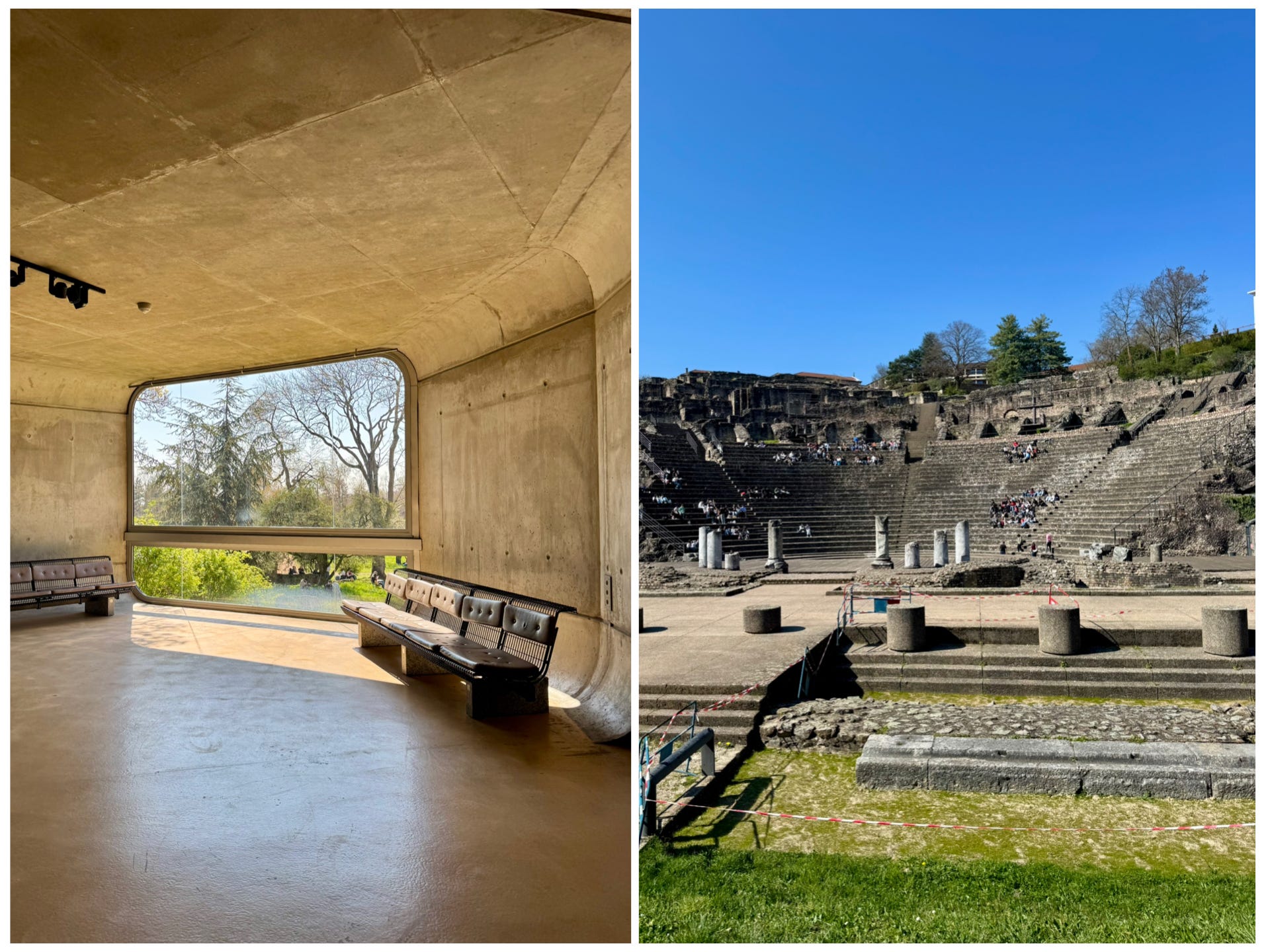
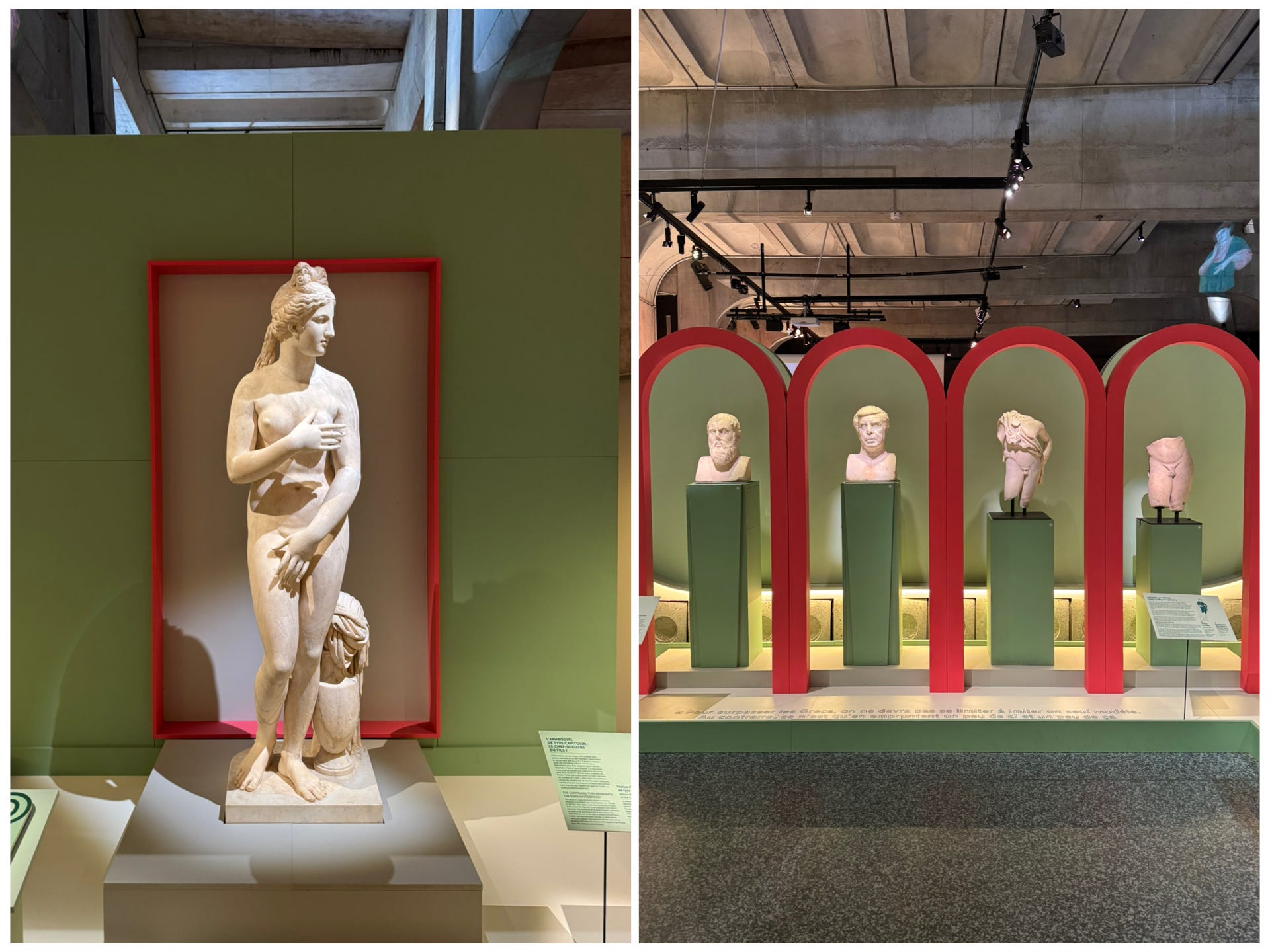
The Roman ruins (yes, you read that correctly) in Lyon may not be as expansive those in Italy and Greece, but they are exceptionally well-preserved and impressive. Here, the Roman city of Lugdunum, founded in 43 BC, includes the ruins of the main theater and odeon, and the Roman baths, which were only uncovered in the ‘70s, with ancient warming and cooling rooms. To top it off, the archaeology museum of the same name, Lagdunum, is absolute perfection—the architecture and design, scale and curation, every square inch.
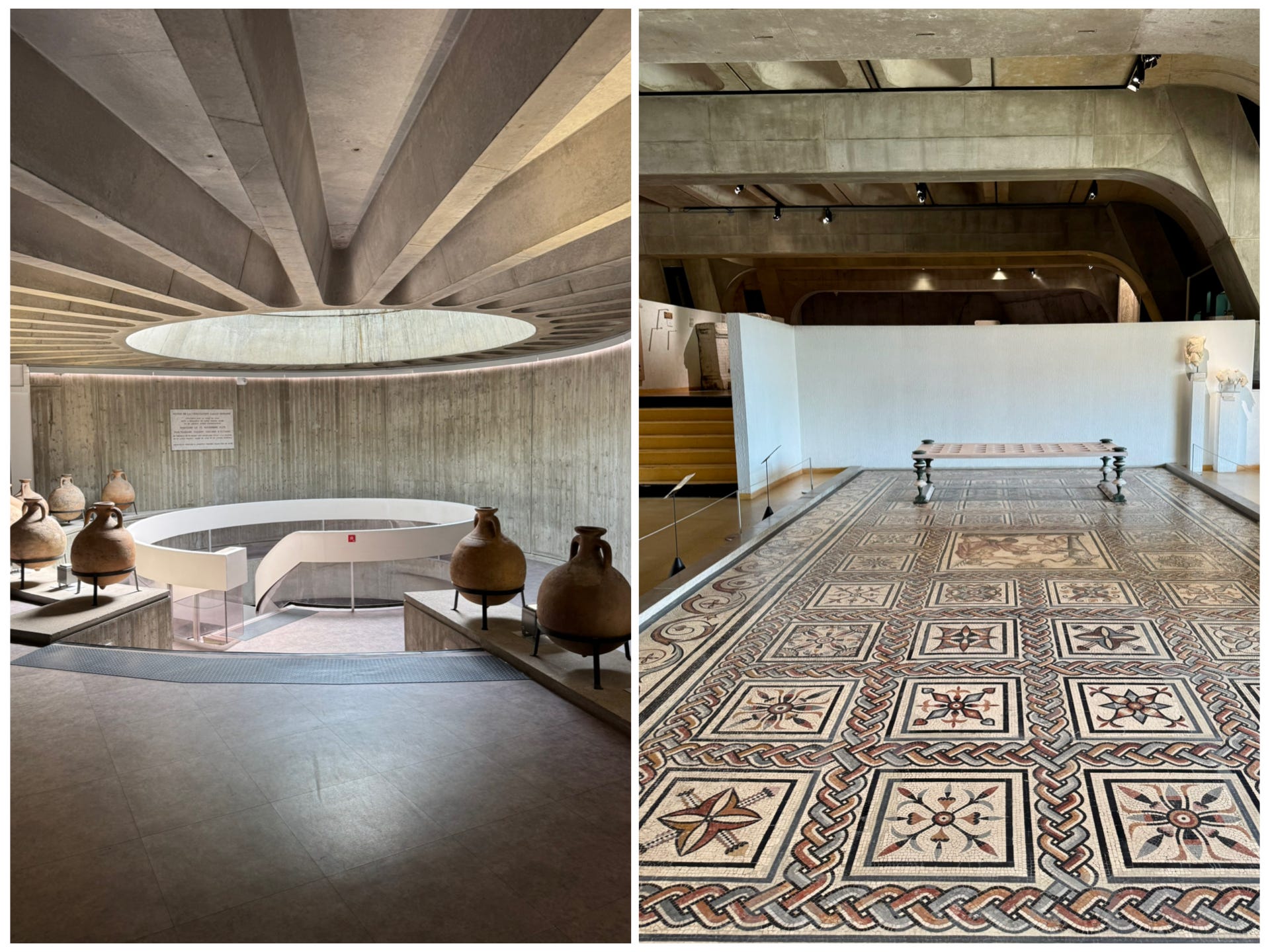
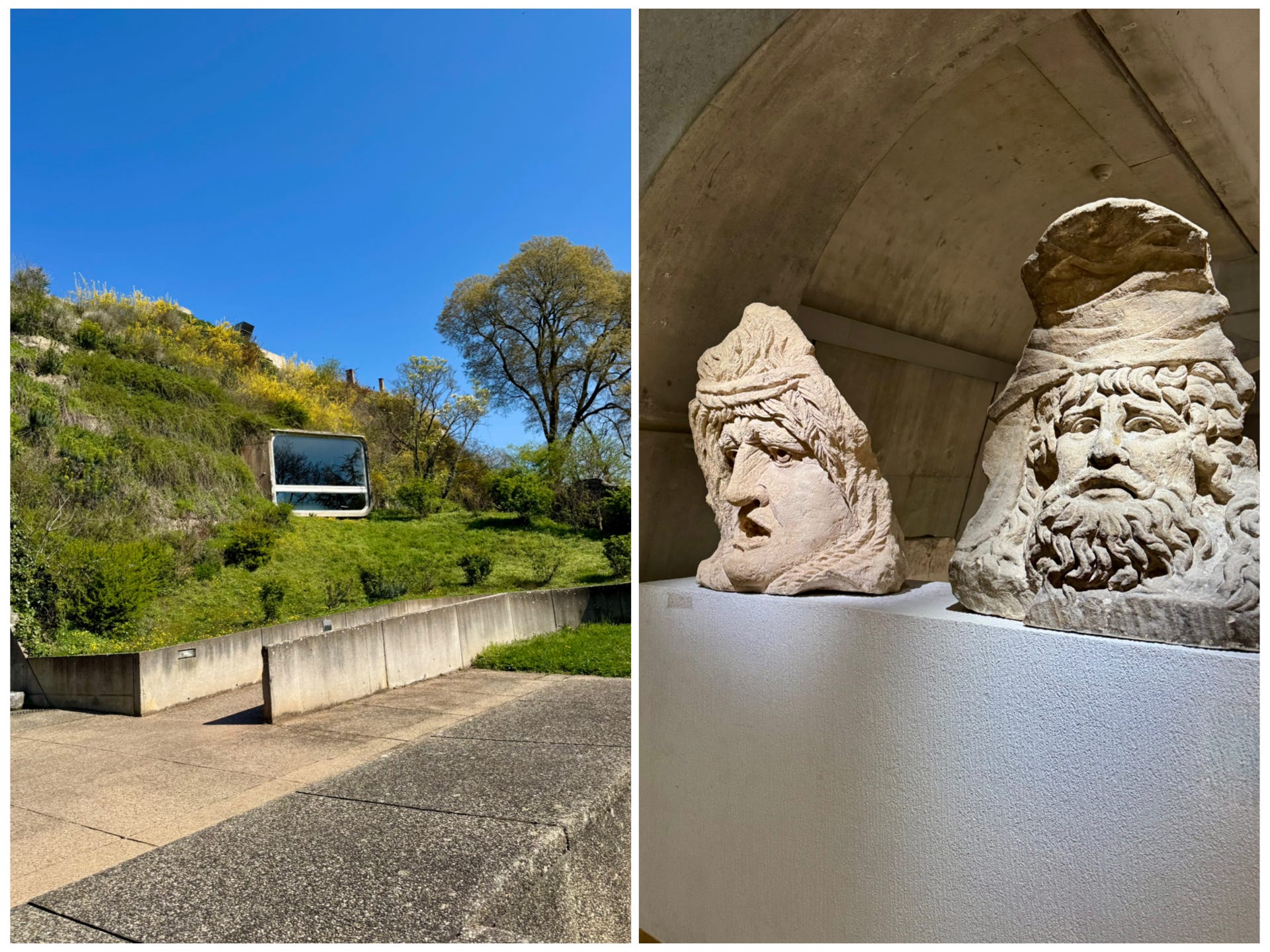
Designed by Bernard Zehrfuss in the early ‘70s, Lagdunum (previously called the Gallo-Roman Museum) was built right into Fourvière hill, the grassy slope brilliantly obscuring its Brutalist appearance from the outside. Inside, the museum is a stunningly beautiful repository for artifacts dating back to prehistoric times up through when Christianity was introduced to Gaul—discovered right on site—with an impressive collection ancient statuary, mosaics, amphorae, objects for daily living, and the centerpiece of the collection, the Claudius Tablet—a bronze tablet containing a speech from 48 AD.
After treading the gentle concrete spiral, wending your way through the museum’s exhibitions, which cleverly echo a descent through time and ancient strata, steal a few moments in front of the oblong windows, or “light canons,” which look out over the adjacent Roman theatre, before heading back outside. It’s a revelation to see it from this angle, offering a sharper perspective at ground level.
FOR YOUR NOTES
Yes it can feel oppressively busy in the Vieux Lyon by day, but once it empties of tour-group tourists, you’re left alone in a achingly beautiful neighborhood dating back to the 15th century. A quiet open-air night museum.
Pastry Fix: Lyon has been heralded as the French food town of all food towns—heavy, rustic dishes served in cozy bouchons— but don’t be afraid to opt for something lighter, faster, less Lyonnaise. Our favorite food experience was grabbing a sandwich and pastry at Boulangerie Saint Paul and heading straight to the edge of the Saône, where locals relax morning, noon and night with elaborate picnics.
Where to Stay: Lyon is remarkably, disappointingly short on decent hotels, but maybe that’s a blessing in disguise. The tourists that descend on the olde port by day do not stay the night. Our $150-a-night hotel, Académie Hôtel, served its purpose—and you’ll get to experience first-hand a private interior traboule and open staircase, straight out a Renaissance fantasy. Next time, I might try Hôtel Fort St Laurent for its quiet location, beautiful outdoor spaces and magnificent views over Lyon in every direction.
We had such a fantastic time watching Lyon FC play at Groupama Stadium, which is about 15 mins outside the city by train. Reading about how to get there and back is intimidating, but in reality, it’s a breeze. DM me if you have any questions about transportation or buying tickets. Happy to share my experience.
One more canut for your list! We missed Soierie Saint-Georges, where 19th-century Jacquard looms are still used to create fabrics for high-end fashion and chateaus, but if I was solo on this mission, I would have made an appointment.
Great story of a great visit to a great city! 👍👍
Love this! I marvel at the way you quickly reconstituted your plans and found the proverbial ‘silver lining’ after a disappointment. 🧵 + 🥅